

 Fire protection system maintenance
 Structural inspection
 24/7 Emergency repair
 Routine maintenance
 On-demand maintenance
 Upgrading and renovating

Waterproofing and leak repair for buildings in use
TECO MSC fixes leaks in occupied buildings: flat roofs, rooftop terraces, toilets and external walls. Every leak has its own cause, so the first step is a survey to trace the water path; only then do we choose the material. TECO MSC fixes the root cause of the leak, not just the stain on the ceiling below.
Buildings we serve: factories, offices, schools, hospitals and villas in Ho Chi Minh City and southern Vietnam.
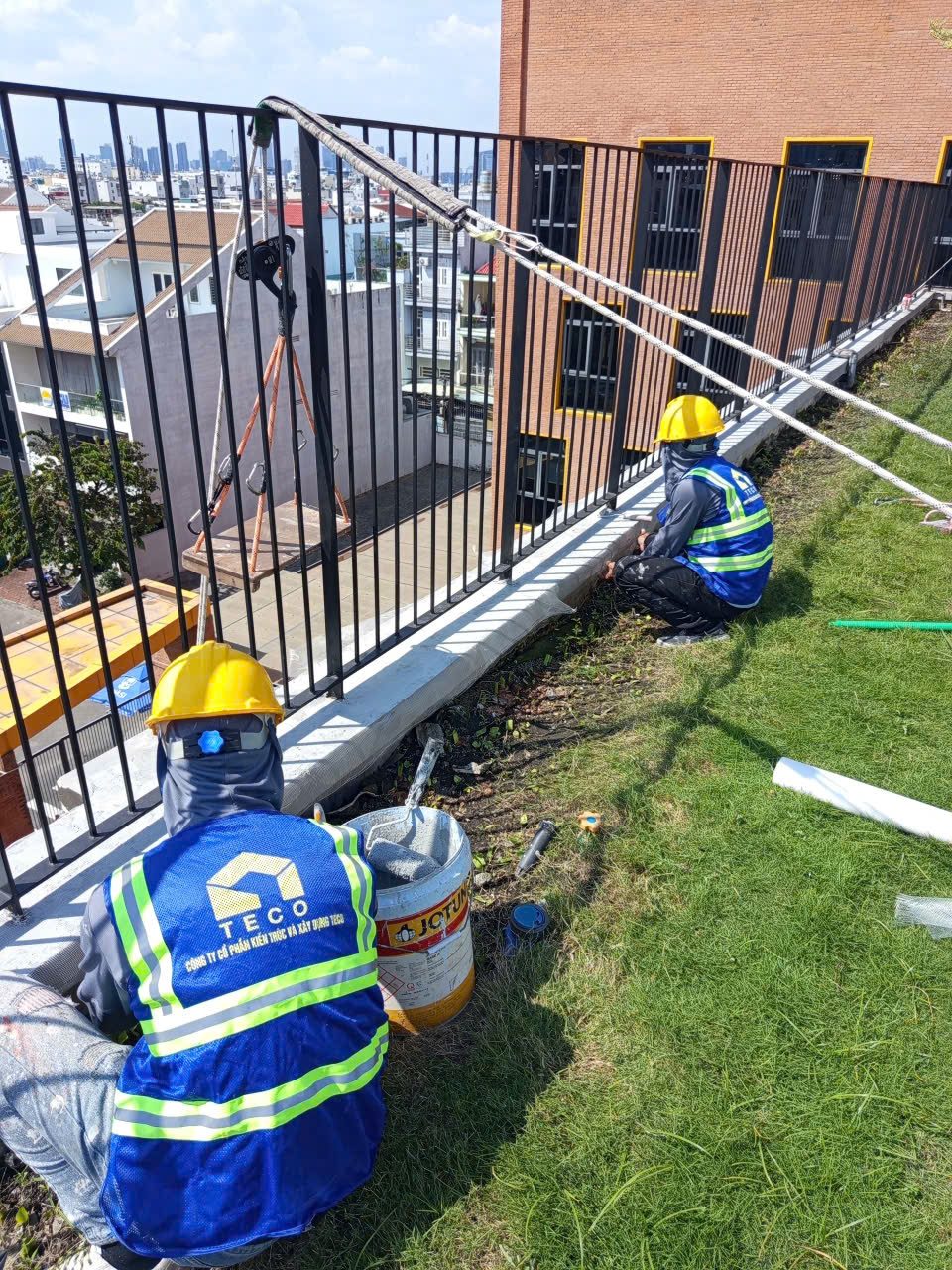
Fix the root cause, not just the stain
A ceiling stain is rarely right below the point where water gets in. Water can travel along pipe penetrations, construction joints or the wall–slab junction before it shows up somewhere else. Patching the stain or brushing another coat on top only sends the water another way, and the leak returns after a few rainy seasons. So TECO MSC works in this order:
- Trace the water path: work back from the stain – floor drains, pipe penetrations, construction joints, cracks, wall bases, concealed supply and drain pipes; zone-by-zone flood tests where needed.
- Fix the cause first: replace leaking pipes, clear blocked drains, correct falls that hold water, remove failed old waterproofing, inject foam into slab cracks.
- Re-waterproof the failed area: material chosen for the location and substrate, with weak points reinforced.
- Water-test before handover: the protective screed or tiling goes on only after the flood test passes.
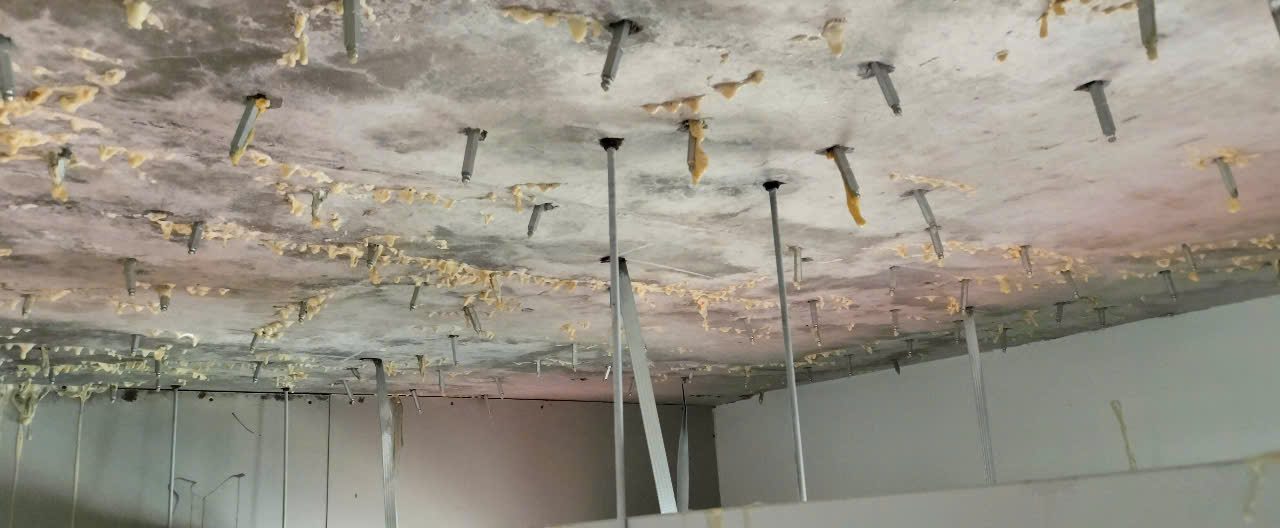
Where we work
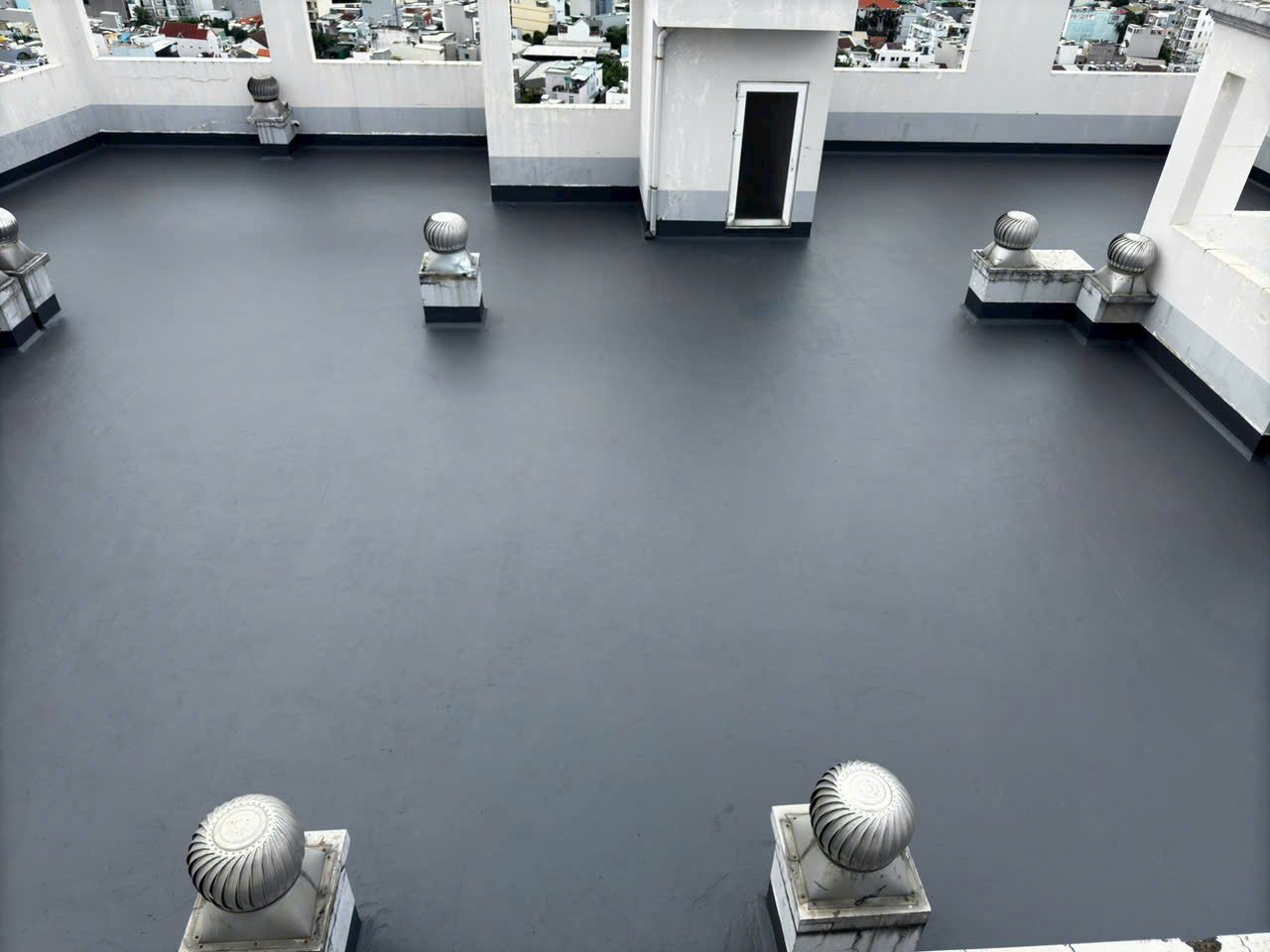
- Flat roofs, rooftop terraces, planters: clean the substrate, treat drains and pipe penetrations, cove the wall base, apply the waterproofing layer and turn it up the wall.
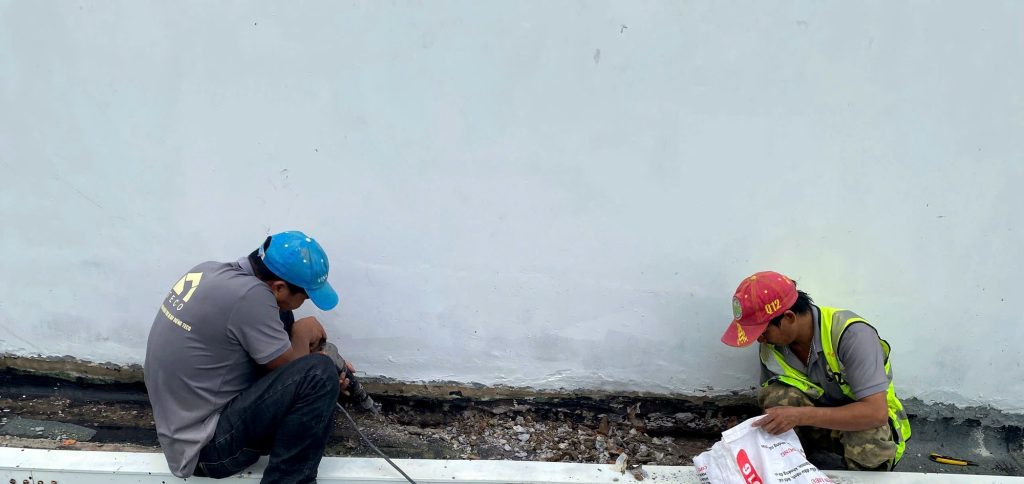
- Wall base at roof level: remove failed old layers and rebuild the junction.
- Toilets: treat pipe penetrations and slab cracks, waterproof the floor and wall base, flood-test before re-tiling.
- External walls: fill cracks, apply waterproof paint before the finish coat.
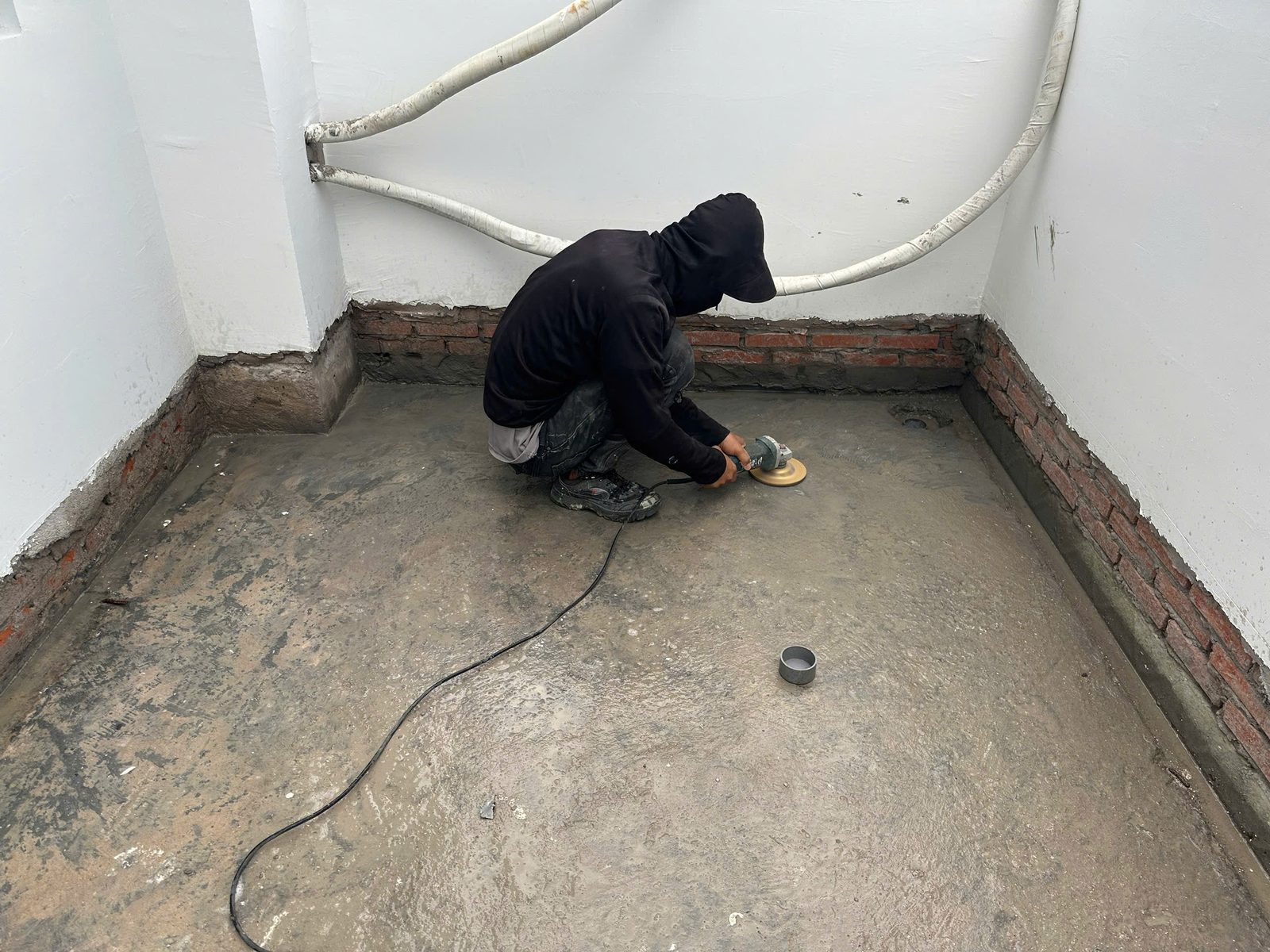
Materials we install
Chosen by location, substrate condition and whether tiles or screed go on top:
| Material | Used for | Notes |
|---|---|---|
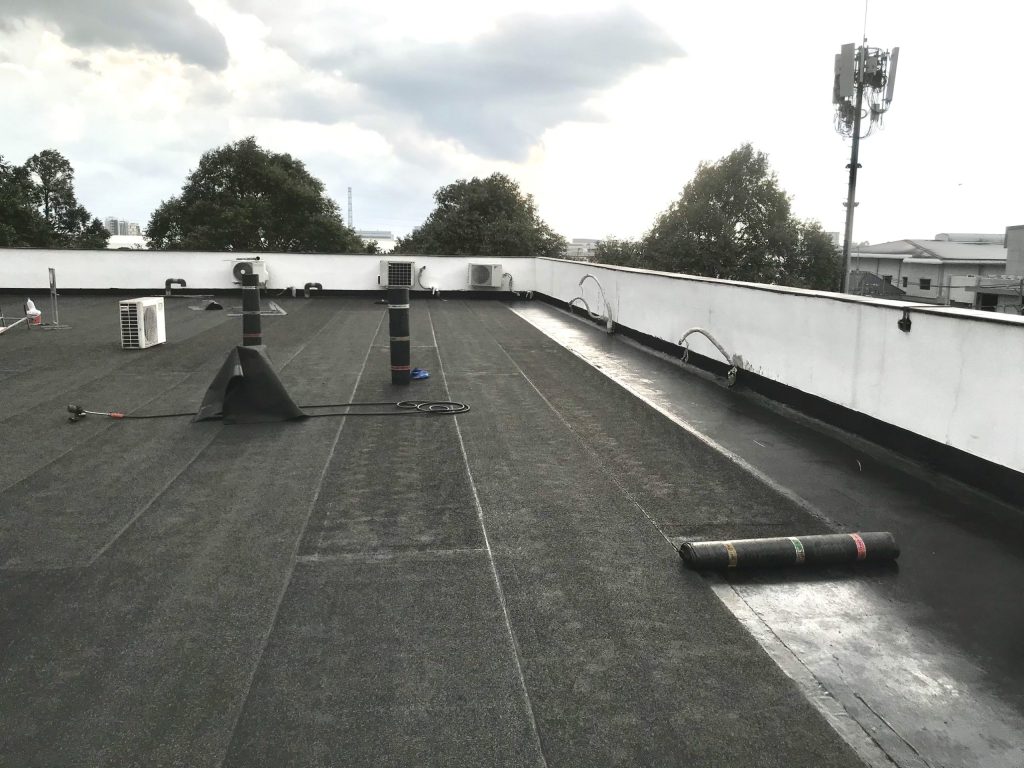
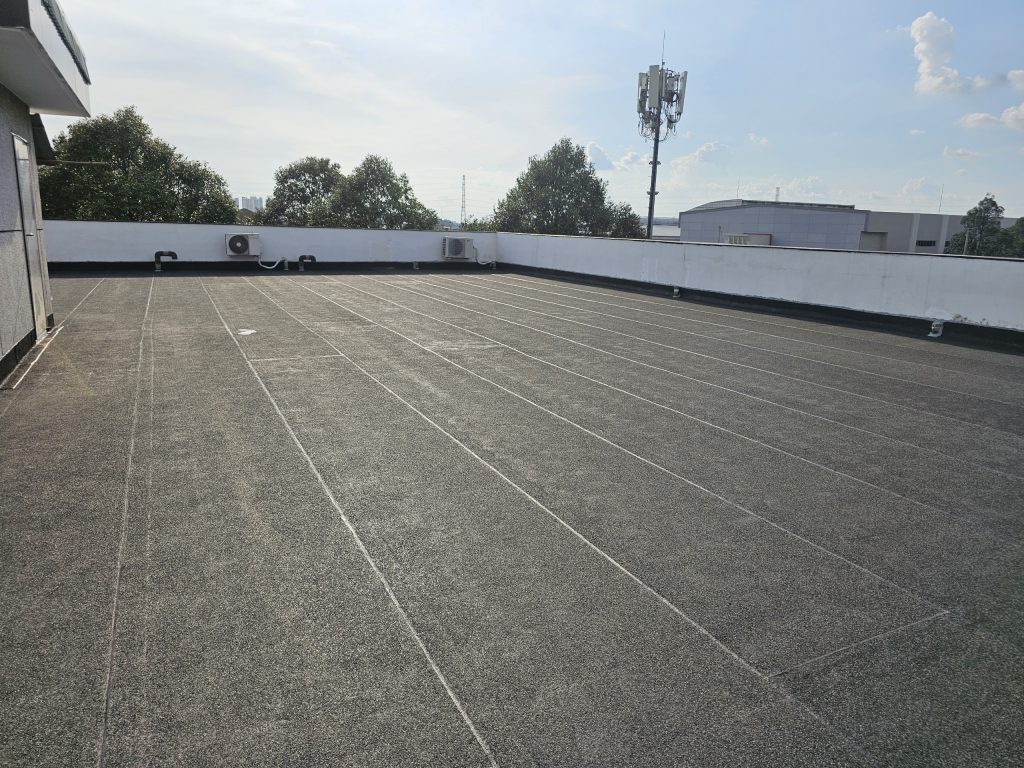
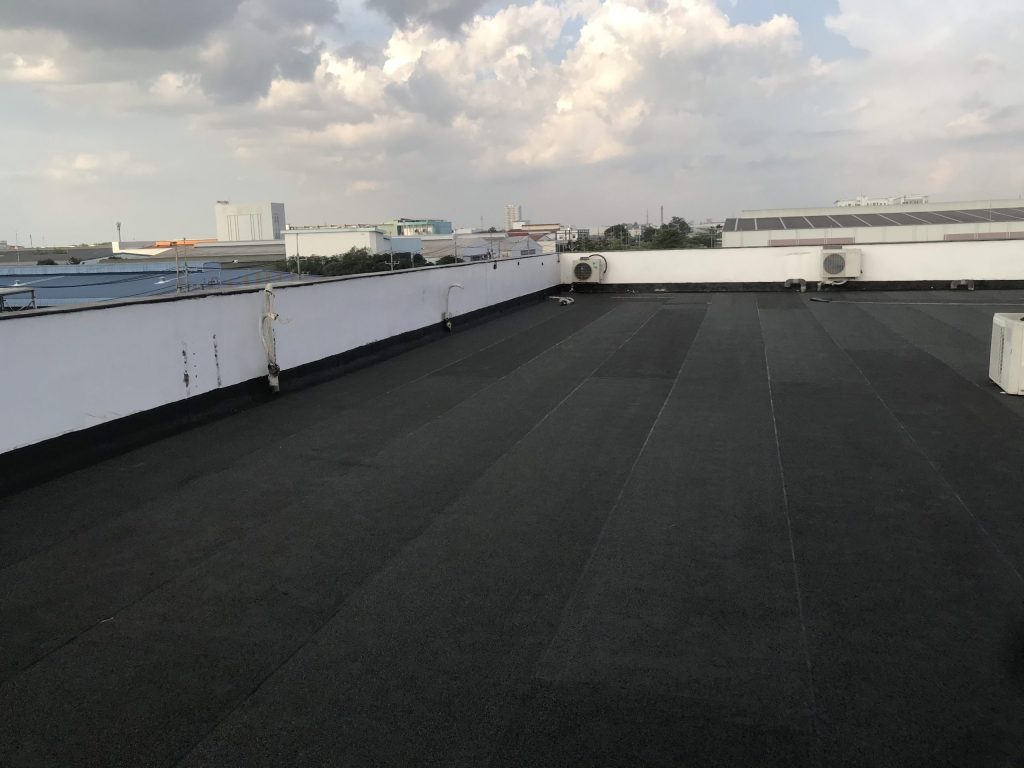
| Torch-applied membrane (polymer-modified bitumen) | Large flat roofs and terraces, ageing roofs | Thick membrane that tolerates ponding; torched from low to high, turned up the walls |
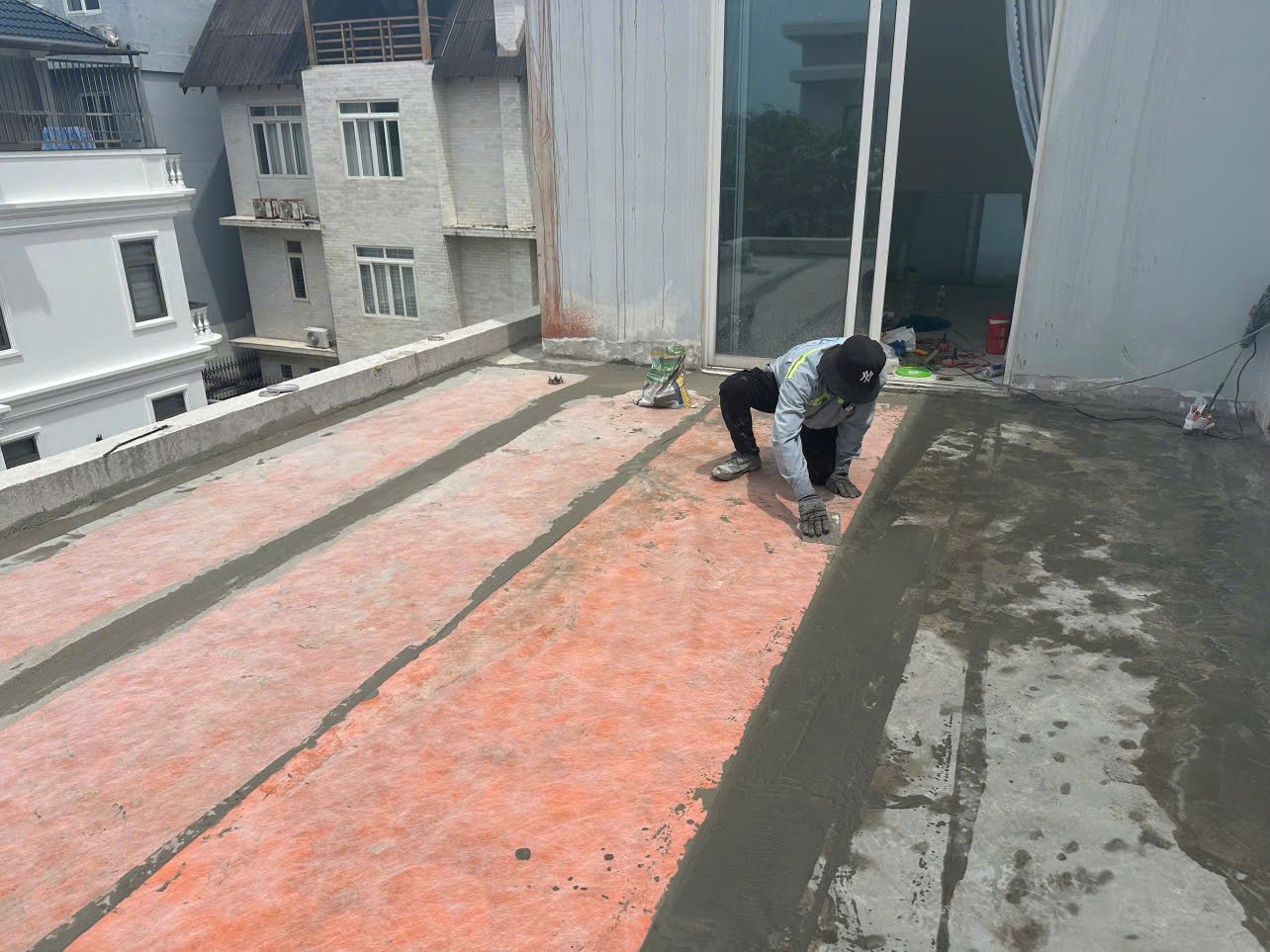
| PE waterproofing membrane | Terraces and flat roofs finished with screed or tiles | Laps bonded with a cement-based compound |
| Two-component cementitious coating | Toilets, balconies, water tanks, wet areas finished with tiles | Can be applied on slightly damp substrates; usually 2 coats, mesh reinforcement at corners and pipes |
| Polyurethane (PU) | Exposed terraces and flat roofs, areas needing an elastic coating | Seamless membrane; substrate must be dry and clean; UV-resistant PU top coat where exposed |
| Waterproof paint | External walls | Applied after crack filling, before the finish coat |
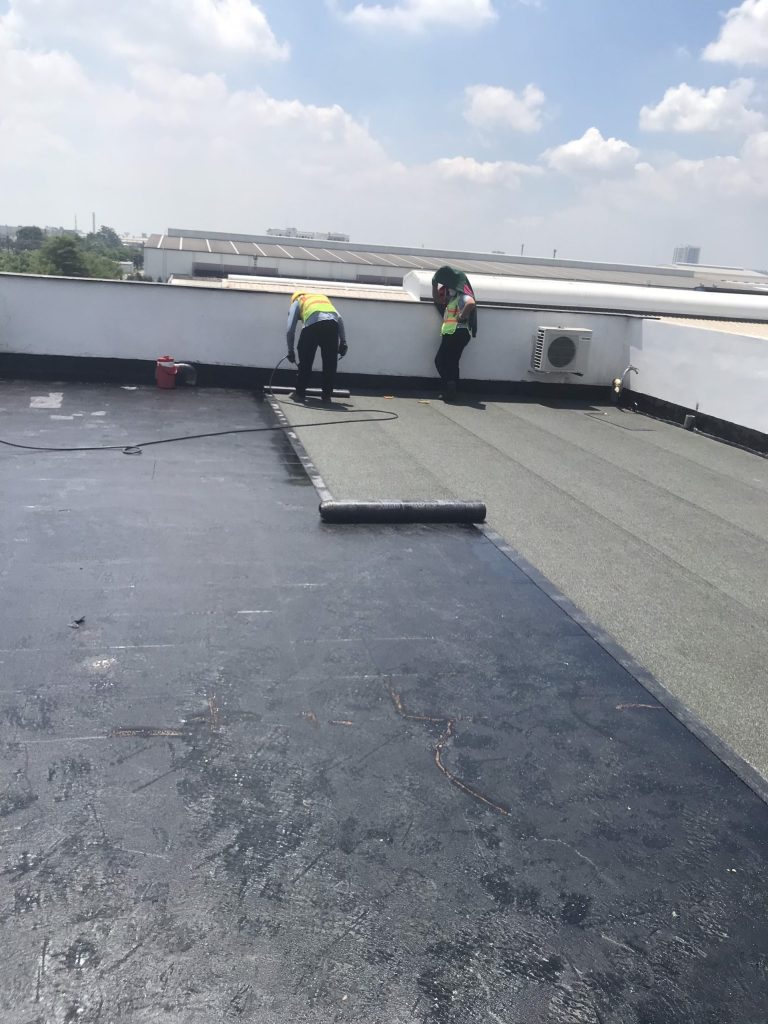
Work sequence
- Survey and trace the leak: check drains, pipe penetrations, joints and cracks; flood-test toilets to isolate the source.
- Method, materials, quantities: quotation by location.
- Substrate preparation: remove blistered old layers, grind and clean the surface, treat cracks, cove wall bases with mortar. For PU the substrate must be dry before priming.
- Reinforce weak points: pipe penetrations, drains, corners, cracks, construction joints – mesh or fabric embedded between coats.
- Apply the waterproofing with the full number of coats and the required waiting time between coats.
- Water test and acceptance: flood test typically 24–48 hours (toilets, terraces) or roof water test; check the ceiling below before tiling or screeding.
Roof waterproofing should be done before repainting below, so new paint is not damaged by water.
Working in buildings that stay open
- Cover the area below and work zone by zone.
- Toilets are done one room at a time; the whole toilet block is never closed.
- Lifelines at roof edges and planters; fire extinguisher on hand when torching membrane; in factories we work under the owner’s work permit and hot-work permit.
Completed projects
- Torch-applied membrane waterproofing of a 350 m² office roof, Compass II, VSIP 1 – nearly 20-year-old building, method statement approved by the factory.
- Renaissance International School Saigon – roof wall-base waterproofing and external wall waterproof paint during the school break.
- Factory metal roof leak repair, 1,800 m², VSIP 1 – new screws, sealed laps, water-tested.
Frequently asked questions
Does the area below have to close?
Usually not. Roof work does not affect the floors below; toilets are done room by room.
Torch-applied membrane, PE membrane, cementitious or PU?
It depends on the location. Tiled toilets usually take a cementitious coating; exposed terraces suit PU with a UV-resistant top coat; screeded or tiled terraces take PE membrane or cementitious coating; large, ageing roofs suit torch-applied membrane. TECO MSC recommends after the survey.
It was waterproofed before but leaks again – why?
Usually the previous job only treated the stain without finding the real source (pipe penetration, slab crack, concealed pipe), or skipped the flood test before tiling. TECO MSC surveys again from scratch before proposing a fix.
When can the area be used again?
It depends on the material and weather, plus the flood-test time; TECO MSC states it in the method.
What if the leak comes from a concealed pipe?
The pipe is repaired first, then the waterproofing – see Electrical and plumbing repair & maintenance.
Request a survey and quotation
TECO MSC surveys, traces the leak and quotes waterproofing and leak repair in Ho Chi Minh City and southern Vietnam. Hotline: +84 911 111 929 · Send a survey request
Related services: Electrical and plumbing repair · Metal roof leak repair · 24/7 Emergency Repair · Periodic maintenance